" height="21.943622918266314px" id="HqU1V_VXu" width="76.57577685890533px"/><path d="M 20.228 10.24 L 10.114 10.24 L 10.114 8.777 L 20.228 8.777 Z M 21.672 20.48 L 15.171 20.48 L 15.171 19.018 L 21.672 19.018 Z M 0 19.018 L 0 0 L 1.445 0 L 1.445 19.018 Z M 20.228 19.018 L 20.228 0 L 21.672 0 L 21.672 19.018 Z" fill="rgb(255, 255, 255)" height="20.480488152641314px" id="bfuCuMlPp" transform="translate(27.507 1.519)" width="21.672358558014366px"/><path d="M 42.622 19.018 L 42.622 0 L 44.067 0 L 44.067 19.018 Z M 54.903 8.777 L 54.903 0 L 56.348 0 L 56.348 8.777 Z M 75.131 8.777 L 75.131 0 L 76.575 0 L 76.575 8.777 Z M 70.796 19.018 L 70.796 10.241 L 72.241 10.241 L 72.241 19.018 Z M 59.238 19.018 L 59.238 10.241 L 60.683 10.241 L 60.683 19.018 Z M 1.445 0 L 1.445 20.481 L 0 20.481 L 0 0 Z M 11.559 20.481 L 1.445 20.481 L 1.445 19.018 L 11.559 19.018 Z M 21.672 10.24 L 10.114 10.24 L 10.114 8.777 L 21.672 8.777 Z" fill="rgb(255, 255, 255)" height="20.480826258659363px" id="TduQKyNcg" transform="translate(0 1.519)" width="76.57543472988937px"/><path d="M 10.114 9.07 L 10.114 0 L 11.559 0 L 11.559 9.07 Z M 0 19.311 L 0 10.533 L 1.445 10.533 L 1.445 19.311 Z M 10.114 20.774 L 10.114 13.459 L 11.559 13.459 L 11.559 20.774 Z M 4.334 20.774 L 4.334 13.458 L 5.779 13.458 L 5.779 20.774 Z M 5.78 13.459 L 10.114 13.459 L 10.114 14.922 L 5.78 14.922 Z M 5.78 19.311 L 10.114 19.311 L 10.114 20.774 L 5.78 20.774 Z M 79.032 2.487 L 92.035 2.487 L 92.035 3.95 L 79.032 3.95 Z M 96.37 2.487 L 109.373 2.487 L 109.373 3.95 L 96.37 3.95 Z M 113.708 2.487 L 126.711 2.487 L 126.711 3.95 L 113.708 3.95 Z M 135.38 2.487 L 148.384 2.487 L 148.384 3.95 L 135.38 3.95 Z M 86.256 8.339 L 92.035 8.339 L 92.035 9.802 L 86.256 9.802 Z M 97.815 8.339 L 110.818 8.339 L 110.818 9.802 L 97.815 9.802 Z M 80.477 15.653 L 93.48 15.653 L 93.48 17.116 L 80.477 17.116 Z M 97.815 15.653 L 110.818 15.653 L 110.818 17.116 L 97.815 17.116 Z M 79.032 15.653 L 79.032 3.95 L 80.477 3.95 L 80.477 15.653 Z M 96.37 15.653 L 96.37 3.95 L 97.815 3.95 L 97.815 15.653 Z M 113.708 17.116 L 113.708 3.95 L 115.153 3.95 L 115.153 17.116 Z M 135.38 15.653 L 135.38 3.95 L 136.825 3.95 L 136.825 15.653 Z M 152.718 15.653 L 152.718 2.487 L 154.163 2.487 L 154.163 15.653 Z M 170.056 15.653 L 170.056 2.487 L 171.5 2.487 L 171.5 15.653 Z M 187.394 15.653 L 187.394 2.487 L 188.839 2.487 L 188.839 15.653 Z" fill="rgb(255, 255, 255)" height="20.773521135658505px" id="jAG3tW2Le" transform="translate(10.169 1.182)" width="188.83858780606124px"/><path d="M 62.127 5.852 L 75.131 5.852 L 75.131 7.315 L 62.127 7.315 Z M 79.465 5.852 L 92.469 5.852 L 92.469 7.315 L 79.465 7.315 Z M 96.803 5.852 L 108.362 5.852 L 108.362 7.315 L 96.803 7.315 Z M 79.465 0 L 91.024 0 L 91.024 1.463 L 79.465 1.463 Z M 92.469 1.463 L 92.469 5.852 L 91.024 5.852 L 91.024 1.463 Z M 109.807 7.315 L 109.807 14.629 L 108.362 14.629 L 108.362 7.315 Z M 62.127 13.166 L 75.131 13.166 L 75.131 14.629 L 62.127 14.629 Z M 79.465 13.166 L 92.469 13.166 L 92.469 14.629 L 79.465 14.629 Z M 34.675 14.629 L 34.675 1.463 L 36.12 1.463 L 36.12 14.629 Z M 56.348 13.166 L 56.348 1.463 L 57.793 1.463 L 57.793 13.166 Z M 44.789 13.166 L 57.793 13.166 L 57.793 14.629 L 44.789 14.629 Z M 39.01 14.629 L 39.01 2.926 L 40.455 2.926 L 40.455 14.629 Z M 39.01 1.463 L 39.01 0 L 40.455 0 L 40.455 1.463 Z M 0 13.166 L 0 5.852 L 1.445 5.852 L 1.445 13.166 Z M 17.338 5.852 L 17.338 1.463 L 18.782 1.463 L 18.782 5.852 Z M 106.917 0 L 108.361 0 L 108.361 1.463 L 106.917 1.463 Z M 105.472 1.463 L 106.917 1.463 L 106.917 2.926 L 105.472 2.926 Z M 104.027 2.926 L 105.472 2.926 L 105.472 4.389 L 104.027 4.389 Z M 102.583 4.389 L 104.027 4.389 L 104.027 5.852 L 102.583 5.852 Z" fill="rgb(255, 255, 255)" height="14.62930651858536px" id="yTdOA_r0t" transform="translate(102.194 3.714)" width="109.80650620205734px"/></g></svg>)
Most hardware startups fail not because their prototype doesn't work, but because their mold development process exposes every impractical design fantasy when scaling to production.
I watched a friend's smart water bottle startup implode last year. They'd raised $180K on Kickstarter with a gorgeous prototype, secured pre-orders from three retail chains, and were already planning their Series A pitch. Then the mold quotes came back at triple their budget with a four-month lead time. They went ahead anyway because the orders were waiting. When the first production run arrived, the locking mechanism didn't engage properly due to tolerance issues they'd never encountered in their 3D-printed samples. Fifteen thousand units became very expensive paperweights.
This is what mold development does to hardware products. It takes every shortcut you made during prototyping and turns it into a quantifiable financial disaster.
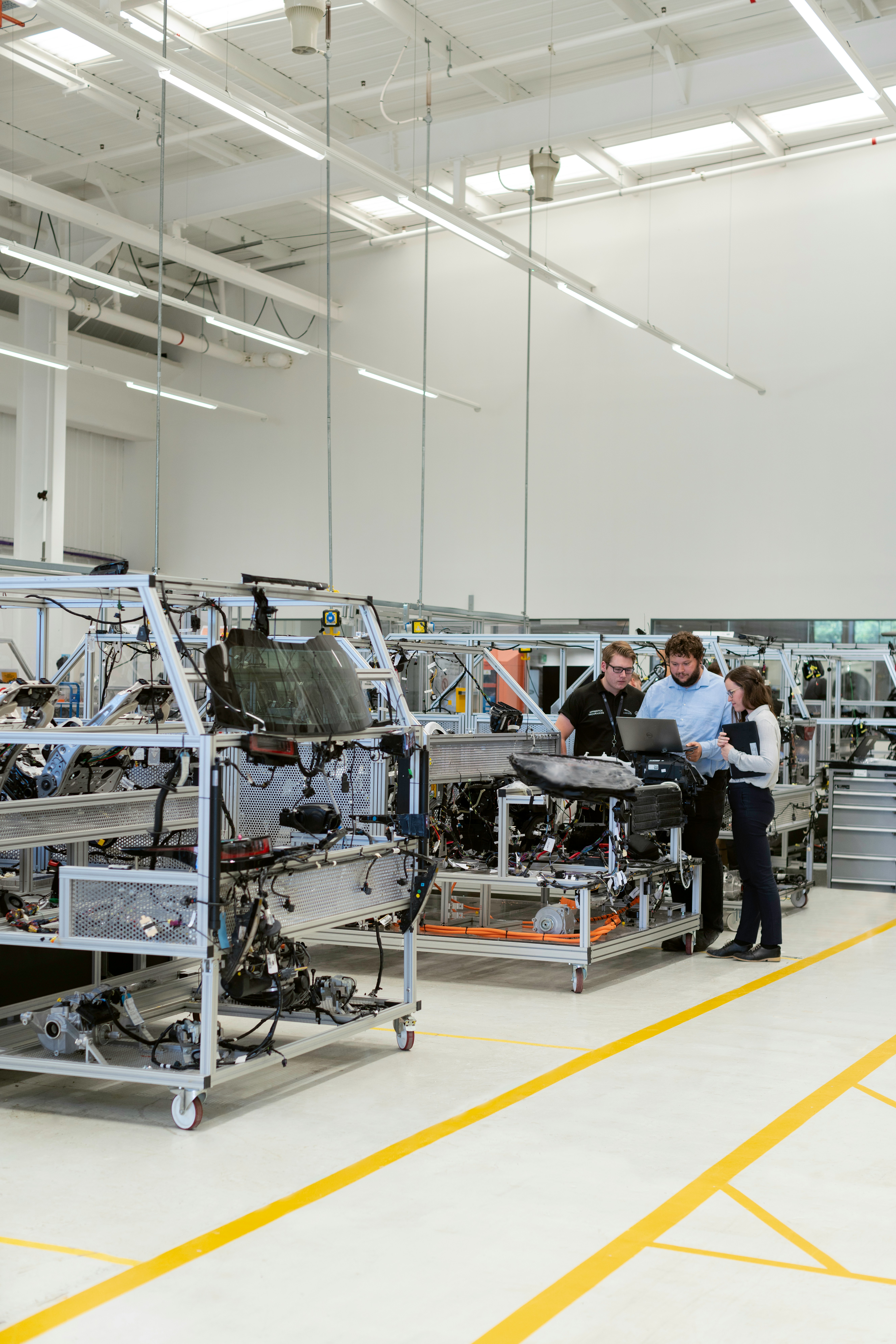
The gap between a functional prototype and a manufacturable product is where most consumer hardware companies die. Your 3D-printed sample works because someone spent three hours hand-finishing the surfaces, because you could use exotic materials that cost $200 per kilogram, because you manually assembled parts that were never designed to snap together consistently. Injection molding doesn't forgive any of that. The process demands that your design obeys physics: uniform wall thickness, appropriate draft angles, clever parting line placement, and tolerance stackups that account for material shrinkage.
I've seen product teams budget $15K for tooling based on something they read online, then get hit with $60K quotes from reputable mold makers. The difference isn't arbitrary markup. A proper production mold for a consumer product needs hardened steel cavity inserts, precision ejector pin systems, cooling channels that prevent warpage, and often multiple slides or lifters for complex geometries. That Kickstarter-famous minimalist speaker you backed probably required eight-cavity family molds with hot runner systems. The tooling cost alone was likely north of $100K before a single unit shipped.
Here's what makes mold development particularly brutal for consumer products: you're optimizing for conflicting requirements simultaneously. Your industrial designer wants invisible parting lines and perfectly smooth surfaces. Your mechanical engineer needs ribbing for structural integrity and bosses for assembly. Your supply chain manager is screaming about cost-per-unit because you promised Amazon a retail price point that barely covers materials. Your mold maker is explaining why your undercut feature requires a side-action that adds $8K to the tool and three seconds to cycle time.


The smart teams bring mold makers into the conversation during the CAD phase, not after the design is frozen. I worked with a small appliance brand that was developing a countertop blender. Their initial design had a gorgeous organic form that would've required a three-plate mold with multiple slides. Their tooling partner suggested a small geometry change that maintained the aesthetic but dropped the mold cost by $22K and reduced cycle time by 40%. That kind of design-for-manufacturing input is worth infinitely more than another iteration of your Figma mockups.
Material selection becomes critical once you're talking about actual molds. That premium soft-touch coating you loved on the prototype? It might require overmolding or a secondary operation that doubles your unit cost. The crystal-clear polycarbonate that looked amazing? It shows every sink mark and weld line unless you nail the processing parameters and mold temperature control. ABS is forgiving and cheap but feels plasticky. Polypropylene is chemical-resistant but has terrible dimensional stability. Every material choice cascades into tooling decisions, cycle time implications, and ultimately whether your margins survive contact with reality.
Then there's the timing nightmare. Western brands trying to hit retail windows or crowdfunding delivery dates consistently underestimate mold development timelines. A simple two-cavity mold might take eight to ten weeks from design approval to first article samples. Complex assemblies with multiple components can push four to five months. If your first samples reveal issues requiring mold modifications, add another four to six weeks per iteration. I've seen companies miss entire selling seasons because they didn't account for Chinese New Year shutting down their mold shop for three weeks, or because their tool needed EDM work that only two facilities in the region could handle.
The first article inspection is where dreams go to die or get validated. You're looking at parts fresh from the tool, checking dozens of critical dimensions, testing assembly interfaces, running drop tests and thermal cycling. Maybe the surface finish isn't quite right because the mold temperature needs adjustment. Maybe there's flashing that indicates venting problems. Maybe your snap fits are too tight because you didn't account for the humidity difference between your climate-controlled design studio and the factory floor where these will actually be assembled. Each issue triggers a decision: can we fix it with processing parameters, or do we need to modify the steel?
Mold modifications are expensive gambling. Welding material onto a mold cavity is relatively straightforward. Removing material is forever. I watched a consumer electronics team approve a mold modification to loosen a tolerance, then realize in assembly that parts now had too much play. The tool was already cut down. Their options were either rebuild that cavity section for $18K or redesign the mating component and tool another mold. They ended up adding a rubber gasket to take up the slack, which added $0.32 to their unit cost across a 50,000-unit production run. That's $16K lost because someone approved a permanent mold change without fully modeling the downstream effects.
The economics of mold development create a weird incentive structure. You want to minimize upfront tooling costs, which pushes you toward aluminum molds or single-cavity tools. But aluminum molds wear out after 10,000 to 50,000 shots depending on the material and geometry. If your product actually succeeds, you'll need to re-tool anyway. Single-cavity molds keep tooling costs down but murder your cycle time and per-unit costs. A four-cavity mold might cost 2.5 times what a single-cavity costs, but it produces parts four times faster. If you're making 100,000 units, the math overwhelmingly favors the multi-cavity tool. But if you're a startup that might not survive to 100,000 units, spending the extra tooling money upfront could kill you before you validate market fit.
This is why experienced hardware entrepreneurs talk about "tooling strategy" as distinct from "product design." You might launch with bridge tooling in aluminum, plan for 20,000 units to validate the market, then invest in hardened steel production tools once you've got confirmed reorders. Or you design modularity into your product so certain components can share tooling across different SKUs. I know a small kitchen appliance brand that designed three different products to share the same base housing mold, just with different top assemblies and electronics. That decision saved them roughly $75K in tooling costs and gave them flexibility to test which product variant resonated with customers.
The companies that survive mold development and scale successfully are the ones that treat it as a design constraint from day one, not a manufacturing problem to solve later. They're sketching parting lines during ideation. They're running tolerance stackup analyses before the first prototype. They're having conversations with mold makers while the product is still a collection of foam models and mood boards. Because by the time you've committed to a design and started cutting steel, your ability to pivot has evaporated. You're locked into whatever decisions you made six months ago, and the market is about to tell you whether you got it right.